
Compact by Design: Why Form Factor Matters in Next Generation Leak Detection
As AI data center evolves, liquid cooling is moving closer to the computing equipment that drives it. Cooling is no longer confined to mechanical rooms or facility piping-rather, it extends into coolant distribution units (CDUs) and manifolds to server racks and direct-to-chip cooling systems, where space is becoming increasingly limited.
As a result, physical footprint has become a critical design consideration alongside detection performance.
The New Reality of High-Density Computing
The transition to direct-to-chip cooling is fundamentally changing data center architecture. Critical cooling components are becoming more compact and tightly integrated as compute density increases. Equipment manufacturers are maximizing every inch of available space, leaving little room for large controllers, bulky sensors, or complex wiring. Hence, leak detection must operate in areas that simply did not exist previously.
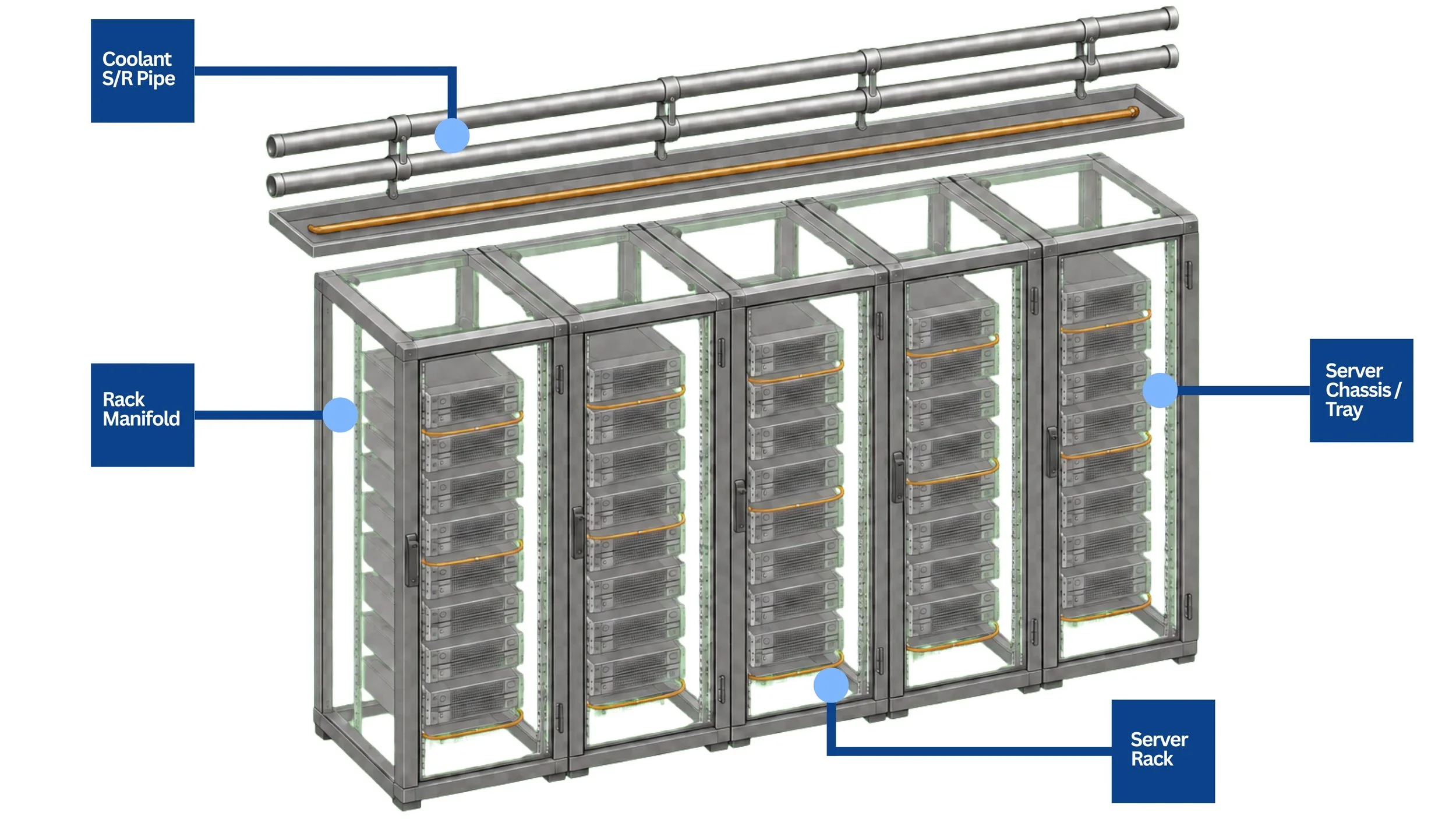
Modern cooling systems often leave little room for:
- Large control modules
- Bulky sensing cable
- Complex cable routing
- Additional junction boxes and/or electronic components
For equipment manufacturers, system integrators and contractors, integrating leak detection into these confined spaces without compromising service accessibility, airflow and cooling efficiency is becoming increasingly challenging.
The closer liquid moves toward the processor, the closer leak detection must follow as well.
Why Compact Matters
A compact leak detection solution is about far more than saving space.
It enables sensors to be installed exactly where leaks are most likely to occur rather than where physical clearance happens to be available. This allows designers to protect cold plates, manifolds, flexible coolant lines, quick disconnects, and other high-risk locations without compromising equipment layout.
Smaller sensing components also simplify integration into OEM platforms, reduce installation complexity, and provide greater flexibility for future cooling architectures as rack power densities continue to climb.
In high-density AI infrastructure, every millimeter recovered can improve serviceability, airflow, or cooling performance.
Purpose-Built for Liquid Cooling
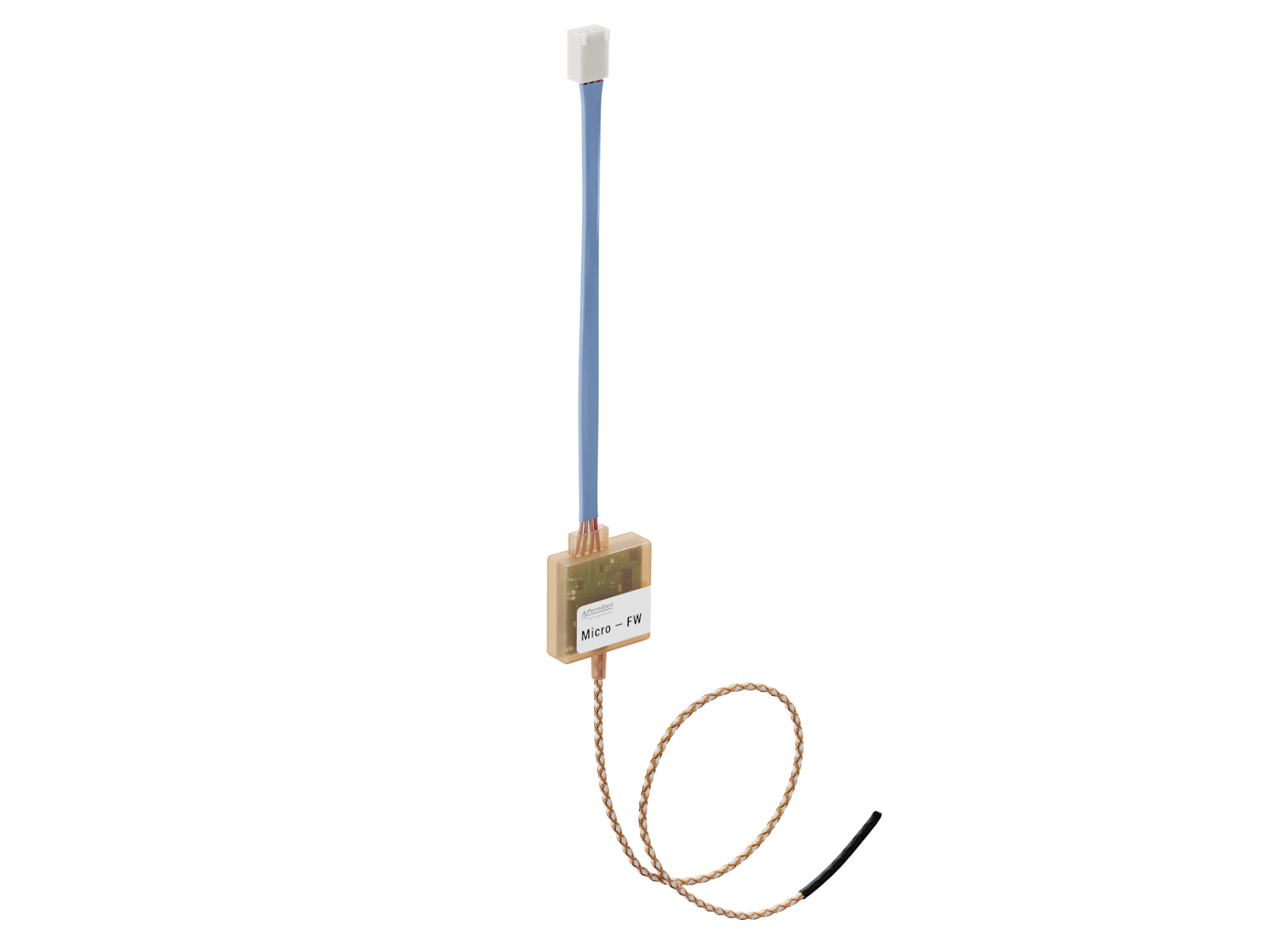
Recognizing these changing requirements, PermAlert developed the MicroFluidWatch (MFW) specifically for these space-constrained applications.
With an ultra-compact controller measuring just 1.1 × 1.1 × 0.3 inches (28 × 28 × 8 mm) and a rugged sensing cable only 0.08 inches (2 mm) in diameter, the MicroFluidWatch can be integrated into locations where legacy leak detection solutions may be difficult-or impossible-to install.
The MicroFluidWatch is well suited for:
Direct-to-chip liquid cooling
CDU leak detection
Server racks
Manifolds
Cold plates
Immersion cooling systems
Other high-density liquid cooling applications
Rather than requiring designers to accommodate the leak detection system, the MicroFluidWatch is designed to integrate seamlessly into modern compact cooling architectures.
Small Size. Full Protection.
A smaller footprint should never come at the expense of performance.
The MicroFluidWatch detects both conductive and non-conductive liquids, including water-glycol coolants, dielectric fluids and deionized water-allowing operators to adapt to evolving cooling technologies with a single sensing platform.
Its compact size allows leak detection to be installed closer to potential failure points, enabling faster leak detection while preserving the reliability expected in mission critical environments.
Built for the Next Generation of AI Infrastructure
As AI data centers continue pushing toward higher rack densities and more advanced cooling technologies, every component must be optimized for space, performance, and reliability.
The next generation of monitoring solutions will not be defined solely by sensitivity or detection speed, but by their ability to integrate seamlessly in hard to access space of an increasingly condensed cooling system.
The MicroFluidWatch was engineered with this new reality in mind-, delivering powerful leak detection in an ultra-compact package that fits where today's liquid cooling systems need protection most.
Because in AI data centers, every millimeter matters.
PERMALERT | CONTINUOUS LEAK INTELLIGENCE FOR RESILIENT OPERATIONS